Menu

Video: Community Environment

The fundamental aim of Montessori education is to help children become fully-fledged citizens of the world. How do we achieve something so monumental?

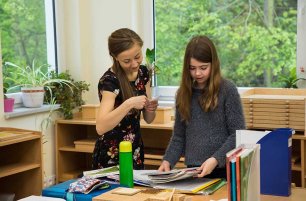
One of the active ways we do this is by creating a classroom community, a microcosm of society that utilizes multi-age groups, peer-guided learning and the understanding that everyone in the community needs to take part in its functioning by cooperating with others and participating to the best of their ability. Through working together towards common goals, we develop independent, critical thinkers who understand their role and value within the group. Check out our video:

Want to learn more? Read our next article:
FUTURE OF EDUCATION

Další články

Supporting Independence in the Toddler Child

In Montessori education, we often speak about independence. Helping raise children into confident adults is a priority for all of us – but why is independence so important and how do we nurture it in even our youngest learners?

Read more

IMSP Podcast: Meet Alumna Diana Peštová

It’s our pleasure to introduce you to this week’s guest on the IMSP podcast series: Diana Peštová. Born and raised in the Czech Republic, Diana now studies language and culture at the University of Amsterdam. Diana catches up with our host, Mariana, as she reflects on how IMSP helped her to think outside of the box. Passionate about writing, singing, and acting, Diana shares how Montessori education allowed her to explore her interests at her own pace.

Read more

Future of Education

Radka Dohnalova, a parent of three IMSP children, has been researching the future of education in this world. She has summarized her findings in the article below, which was also recently published. Radka wanted to share the results with the IMSP community when her research revealed how Montessori education aligns with where the future of education is heading.

Read more

Understanding your child's inner sense of order

Have you ever noticed that your child enjoys singing the same song over and over again, or wants you to repeat the same story for what feels like a million times? Dr. Montessori highlighted the importance of sensitive periods in children, which are known as windows of opportunities for children to develop skills, including movement, language and most definitely, order. A child’s need for external order is present as early as childbirth and peaks in their second year, before fading at about the age of 5. This period of development helps a child to develop a connection between themselves and the world, process information and overcome challenges.

Read more

Planting Toddlers in Mud

April showers bring May flowers... here we are in the blustery, chilly beginnings of Spring. It is a time of much anticipation as the first leaves and flowers appear, but also often much frustration for parents as seemingly endless mud, rain and puddles interfere with outside play.

Read more
29.05.2018
Enroll your child
at IMSP
Register for
Baby & Me
Register for
Toddler & Me
Virtual tour