Menu

Mentorship in our classrooms: Why Mixed Ages Work

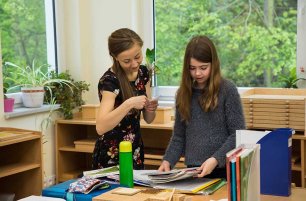
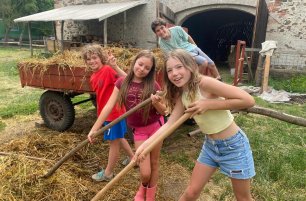
Have you ever noticed the mixed-age classrooms in a Montessori school and wondered why? This is a specific design that allows younger children to benefit from having older peers as role models and mentors and enables older children to step into leadership roles. This model mirrors real-world experiences where people of different ages work together and learn from each other. 

In our IMSP classrooms, older students relish and value the opportunity to be leaders, sometimes stepping into a teaching role. Mentoring their younger friends increases the independence and competence of the older students. This model is also beneficial to the younger children as they look to older students to be role models and helpers. They know that they can count on them for help and, because of this, they can accomplish tasks they may not be able to do independently yet.  

As a whole, children can cooperate rather than compete, creating an environment of learners who support and care for each other.  Check out this video to see Montessori mentorship in action!

Want to learn more? Read our next article:

STARTING PRESCHOOL: HOW TO HANDLE SAYING GOODBYES?

Další články

Communicating with the Toddler Child

As teachers, we are often asked what special tips or tricks we use to get children to cooperate. Most often parents ask questions like “How can I get my child more interested in dressing and eating by themselves?”or “How can we make the mornings run more smoothly?” It can feel challenging when our patience is tested, but we must remember that children are learning to develop their own will and sense of obedience which is a natural process lasting until around six years of age.

Read more

Understanding your child's inner sense of order

Have you ever noticed that your child enjoys singing the same song over and over again, or wants you to repeat the same story for what feels like a million times? Dr. Montessori highlighted the importance of sensitive periods in children, which are known as windows of opportunities for children to develop skills, including movement, language and most definitely, order. A child’s need for external order is present as early as childbirth and peaks in their second year, before fading at about the age of 5. This period of development helps a child to develop a connection between themselves and the world, process information and overcome challenges.

Read more

Future of Education

Radka Dohnalova, a parent of three IMSP children, has been researching the future of education in this world. She has summarized her findings in the article below, which was also recently published. Radka wanted to share the results with the IMSP community when her research revealed how Montessori education aligns with where the future of education is heading.

Read more

IMSP Podcast: Meet Alumna Anna Šlégrová

Join us as our host, Mariana Bečková, interviews Anna Šlégrová on this week’s edition of the IMSP alumni podcast. Reflecting on what made her Montessori experience stand out, Anna stresses IMSP’s personal touch. Teachers, Mariana and Anna share, take time to get to know their students, encouraging them to pursue their passions. Now studying at the University of Bath, Anna shares how growing up in IMSP’s international environment empowered her to pursue higher education abroad.

Read more

IMSP 20th Anniversary

We're excited to celebrate 20 years since IMSP first opened its doors to the Prague community. Two decades spent working with parents, teachers, and staff that share our same passion for holistic education is something we’re proud of. The Montessori method is community-driven, and as we look back on our achievements so far, we want to take time to thank the people that made it all possible.

Read more
29.01.2018
Interactive Open House Register for
Baby & Me
Register for
Toddler & Me
Enroll your child
at IMSP
Virtual tour