Menu

Video: Community Environment

The fundamental aim of Montessori education is to help children become fully-fledged citizens of the world. How do we achieve something so monumental?

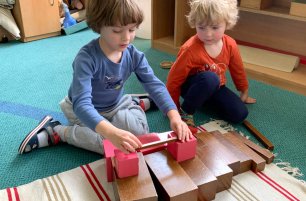
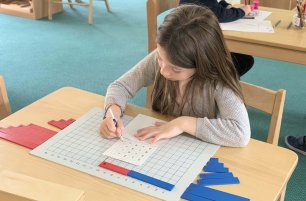
One of the active ways we do this is by creating a classroom community, a microcosm of society that utilizes multi-age groups, peer-guided learning and the understanding that everyone in the community needs to take part in its functioning by cooperating with others and participating to the best of their ability. Through working together towards common goals, we develop independent, critical thinkers who understand their role and value within the group. Check out our video:

Want to learn more? Read our next article:

FUTURE OF EDUCATION

Další články

IMSP Podcast: Meet Alumnus Caleb Miller

Introducing our first guest on the IMSP podcast series: Caleb Miller. After graduating from IMSP, he moved back to the United States, finishing his university degree. Caleb and our host, Mariana, chat about independence in childhood, the benefits of multi-age classrooms, and what advice he has for current IMSP Elementary students. While reflecting on his time at IMSP, Caleb looks towards the future as he pursues a career with a global focus. “That's one thing that Montessori, our school, planted in me,” Caleb tells us, “the desire to engage with the world”.

Read more

Mindful Walks and Experiential Learning in Elementary

Maria Montessori used to walk through the forests in India pulling leaves from trees to teach about their function and structure, digging in the soil to demonstrate the ubiquitousness of life, examining root systems and connecting them to academic ideas.

Read more

Freedom and the Montessori Classroom

“To give a child liberty is not to abandon him to himself."

Read more

IMSP Toddlers: Help Me to Do It Myself

One of the key concepts and skills that Montessori education develops in different ways and from different perspectives through the entire childhood and through the entire educational process is independance. 

Read more

Understanding your child's inner sense of order

Have you ever noticed that your child enjoys singing the same song over and over again, or wants you to repeat the same story for what feels like a million times? Dr. Montessori highlighted the importance of sensitive periods in children, which are known as windows of opportunities for children to develop skills, including movement, language and most definitely, order. A child’s need for external order is present as early as childbirth and peaks in their second year, before fading at about the age of 5. This period of development helps a child to develop a connection between themselves and the world, process information and overcome challenges.

Read more
29.05.2018
Interactive Open House Register for
Baby & Me
Register for
Toddler & Me
Enroll your child
at IMSP
Virtual tour