Mones
Sorry, this article is only in Czech.
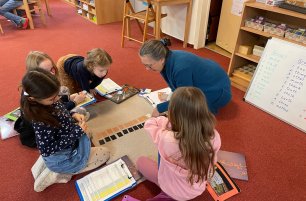
There are a few things typical to Montessori classrooms worldwide that might give the casual observer a pause. Picture it: you walk into a beautiful Casa environment, full of children working, many of them on mats rolled out on the floor. The students moving through the room know to step between mats, never on them. Of course, in the beginning of the school year it took many presentations, repetitions and reminders to instill this routine in the students.
Read more
Have you ever noticed that your child enjoys singing the same song over and over again, or wants you to repeat the same story for what feels like a million times? Dr. Montessori highlighted the importance of sensitive periods in children, which are known as windows of opportunities for children to develop skills, including movement, language and most definitely, order. A child’s need for external order is present as early as childbirth and peaks in their second year, before fading at about the age of 5. This period of development helps a child to develop a connection between themselves and the world, process information and overcome challenges.
Read more
Maria Montessori used to walk through the forests in India pulling leaves from trees to teach about their function and structure, digging in the soil to demonstrate the ubiquitousness of life, examining root systems and connecting them to academic ideas.
Read more
The materials in the Sensorial area of the Montessori classroom are quite unique – they speak to the tactile observer in all of us. When you consider the way humans take in information, you realize how often we use more than one sense to explore. Maria Montessori’s work in the Sensorial environment was designed to take advantage of this tendency. Today, I will discuss the materials featured in the Children’s House classroom (ages 3-6).
Read more
All you will need is 100g of soap, rubber molds, turmeric powder, lemon or orange essential oils, fresh lemon or orange, and a grater or zester.
Read more