Mones
Sorry, this article is only in Czech.
Sorry, this article is only in Czech.



This week, our host Mariana Bečková chats with IMSP alumna Karolína Muchová. Born and raised in Prague, Karolína always knew she wanted to pursue her university education abroad. Press play to learn how IMSP prepared her for a rigorous high school experience and eventually, her choice to enroll at the University of Chicago in the United States. Between authentic one-on-one support and a personalized curriculum designed by IMSP teachers, Karolína shares how her experience with Montessori set her up for success as she spread her wings around the globe.
Read more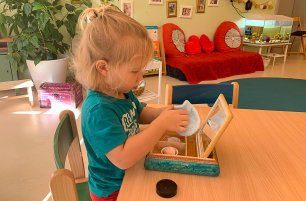
In Montessori education, we often speak about independence. Helping raise children into confident adults is a priority for all of us – but why is independence so important and how do we nurture it in even our youngest learners?
Read more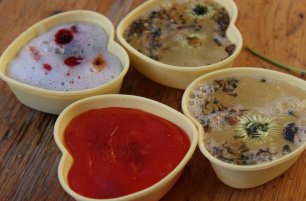
All you will need is 100g of soap, rubber molds, turmeric powder, lemon or orange essential oils, fresh lemon or orange, and a grater or zester.
Read more
Every morning, with any luck, a very enthusiastic and volume‑charged toddler and I make the 45 min…
Read more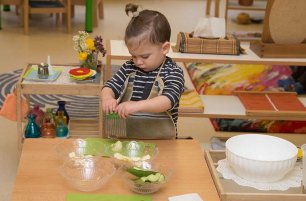
One of the key concepts and skills that Montessori education develops in different ways and from different perspectives through the entire childhood and through the entire educational process is independance.
Read more