Menu

Video: Community Environment

The fundamental aim of Montessori education is to help children become fully-fledged citizens of the world. How do we achieve something so monumental?

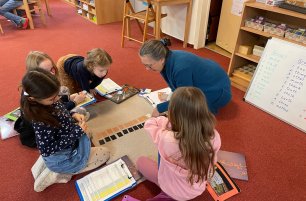
One of the active ways we do this is by creating a classroom community, a microcosm of society that utilizes multi-age groups, peer-guided learning and the understanding that everyone in the community needs to take part in its functioning by cooperating with others and participating to the best of their ability. Through working together towards common goals, we develop independent, critical thinkers who understand their role and value within the group. Check out our video:

Want to learn more? Read our next article:

FUTURE OF EDUCATION

Další články

Video: Blueprint for the classroom: A Way to Move Forward

How do we encourage peacefulness and respect in the Montessori classroom? Together with the children, we prepare a blueprint for our classroom community!

Read more

Holiday Baking With Your Toddler

It's beginning to look a lot like winter - with first frosts and early dark, but also bright twinkling lights and seasonal decorations wherever you look. Is it any wonder that we populate the long, cold nights of December with candle light, evergreens and the smells of a myriad festive treats? So many delicious flavours belong firmly at the close of the year - hot chocolate and sweet tea, spiced pies, delicate cookies and savoury roasts, all keeping us cozy and warm as well as full.

Read more

Learning Mathematics in our Primary Classrooms

Maria Montessori often stated that not only does every human being have an innate drive to understand the environment around them, we all also naturally have what she called a “Mathematical Mind”. In the Montessori classroom, mathematical learning begins through indirect preparation long before a child is ever introduced to any Math materials.

Read more

Communicating with the Toddler Child

As teachers, we are often asked what special tips or tricks we use to get children to cooperate. Most often parents ask questions like “How can I get my child more interested in dressing and eating by themselves?”or “How can we make the mornings run more smoothly?” It can feel challenging when our patience is tested, but we must remember that children are learning to develop their own will and sense of obedience which is a natural process lasting until around six years of age.

Read more

How to Help your Toddler Get Dressed

Patience and a positive attitude are key when helping children with dressing and undressing. This means staying engaged with your child, maintaining eye contact, but also being patient as they process the information and movements. 

Read more
29.05.2018
Interactive Open House Register for
Baby & Me
Register for
Toddler & Me
Enroll your child
at IMSP
Virtual tour